 Call Us : 07313726683Call Us : 07313726683

 Send Inquiry
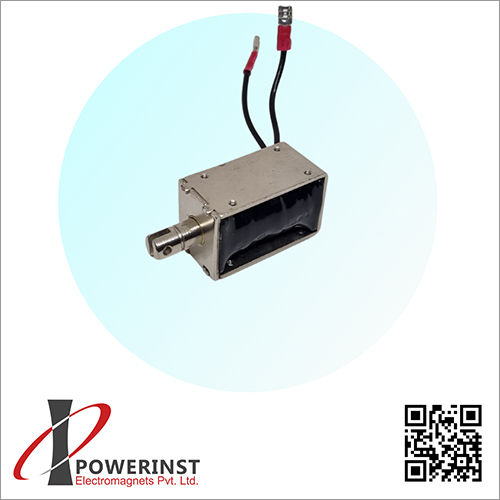
Continuous Solenoids
Continuous Solenoids Specification
- IP Rating
- IP40
- Power Source
- Direct current (DC)
- Components
- Coil, Plunger, Housing, Terminals
- Input
- 12V DC
- Features
- Continuous operation, high reliability, compact design
- Interface
- 2-wire/terminal connection
- Response Time
- <20 ms
- Operating Temperature
- -10°C to +40°C
- Output
- Linear actuation
- Power Supply
- Electric
- Usage
- Industrial automation, control systems
- Product Type
- Continuous Solenoid
- Application
- Locking/unlocking, actuation, movement control
- Rated Voltage
- 12V DC
- Supply Voltage
- 12V
- Size
- Standard (customizable options available)
- Dimension (L*W*H)
- Approx. 84mm x 32mm x 27mm
- Function
- To provide linear motion using electromagnetic force
- Color
- Black and Silver
- Weight
- Approx. 210g
- Current Rating
- 0.7A
- Capacity
- High duty cycle operation
- Frequency
- DC (no frequency)
- Noise Level
- Below 55 dB
- Coil Resistance
- ~17 Ohms
- Plunger Type
- Push-pull linear motion
- Vibration Resistance
- Standard industrial level
- Insulation Class
- Class B
- Operation Mode
- Continuous duty (100% ED)
- Maintenance
- Low, requires periodic cleaning for optimal operation
- Holding Force
- Up to 7N
- Mounting
- Bracket type, panel mounting
- Lead Wire Length
- Approx. 25cm
- Stroke Length
- Approx. 10mm
- Material
- Electromagnetic coil with metal plunger
About Continuous Solenoids
We are successfully engaged in providing a broad variety of Continuous Solenoids. These are cost effective electromagnet element that ensure less maintenance and service. These are compatible with AC and DC voltages. Continuous Solenoids are operated with vertically as well as horizontally both ways. They are utilizing when constant power is needed. Provided series are highly efficient to run at cooler temperatures. They are design for operating conditions in which they are subjected to heavy use.
Designed for Continuous Performance
Built for continuous duty cycles, these solenoids provide reliable push-pull linear motion in demanding industrial automation and control setups. The robust electromagnetic coil and metal plunger ensure stable, long-lasting performance suitable for high-frequency operations where downtime is not an option.
Practical Mounting and Operation
The bracket type, panel-mountable design simplifies integration into new or existing systems. The solenoid operates silently (below 55 dB) and resists standard industrial vibration. With an IP40 rating and Class B insulation, it's engineered for safety and efficient operation in various industrial environments.
Maintenance and Versatility
Periodic cleaning is all that's needed to keep these solenoids operating efficiently, thanks to their low maintenance requirements. Their compact design and customizable size options make them ideal for applications involving locking, unlocking, actuation, and movement control in industrial settings.
FAQ's of Continuous Solenoids:
Q: How does the continuous solenoid achieve linear motion in industrial automation systems?
A: The solenoid uses an electromagnetic coil to generate force upon electric current application, pushing or pulling a metal plunger in a linear direction. This mechanism delivers precise motion for tasks like locking, unlocking, and actuation in control systems.Q: What steps are necessary to install the solenoid using the bracket-type mounting?
A: To install, secure the bracket-type solenoid onto the desired panel with appropriate screws, ensuring stable mounting. Then, connect the 25cm lead wires or terminals to a 12V DC supply as per the wiring diagram, observing polarity for proper function.Q: When should maintenance be performed on a continuous solenoid for optimal performance?
A: Maintenance should be carried out periodically, typically every few months, depending on the operating environment. Routine cleaning ensures the moving parts remain free from dust or debris, maintaining reliable and efficient solenoid performance.Q: Where can these continuous solenoids be effectively utilized?
A: These solenoids are suitable for use in industrial automation, control systems, movement control devices, and electronic locking mechanisms. Their high duty cycle and reliable actuation make them ideal for demanding, continuous operation scenarios.Q: What are the benefits of choosing a solenoid with Class B insulation and an IP40 rating?
A: Class B insulation provides resistance to moderate heat, ensuring safe operation from -10C to +40C. The IP40 rating safeguards against solid objects over 1mm, making the solenoid suitable for controlled indoor industrial environments.Q: How does the solenoid's low noise and vibration resistance benefit industrial environments?
A: The low noise level (below 55 dB) minimizes acoustic disturbances in the workplace, contributing to a safer and more comfortable environment. Standard industrial vibration resistance ensures uninterrupted performance even in settings with machinery-induced vibrations.Q: What advantages does continuous duty (100% ED) operation provide?
A: Continuous duty operation means the solenoid can remain powered and activated without requiring a rest cycle, ensuring non-stop actuation and enabling use in applications demanding round-the-clock performance.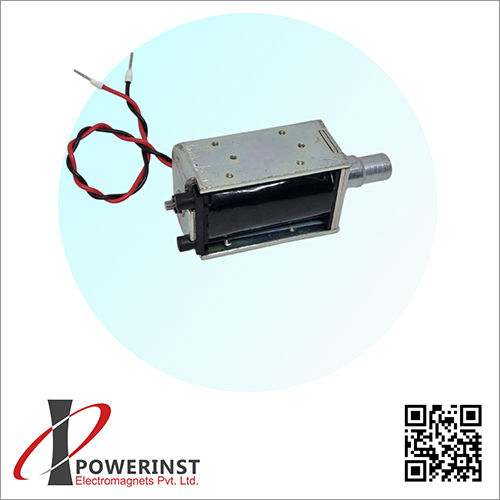
Tell us about your requirement

Price:
Quantity
Select Unit
- 50
- 100
- 200
- 250
- 500
- 1000+
Additional detail
Mobile number
Email

More Products in Industrial Solenoid Category
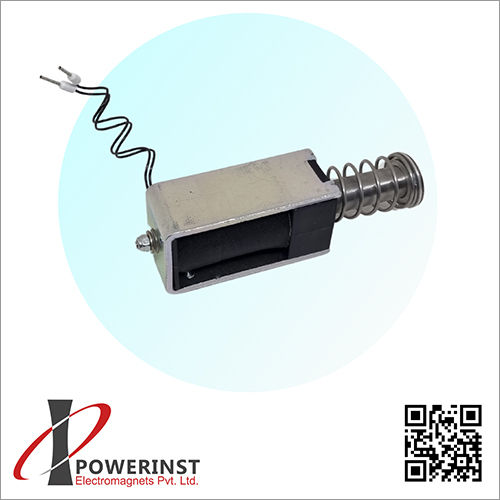
Series Trip Solenoids
Usage : Industrial Electronics
Power Supply : Electric
Product Type : Series Trip Solenoid
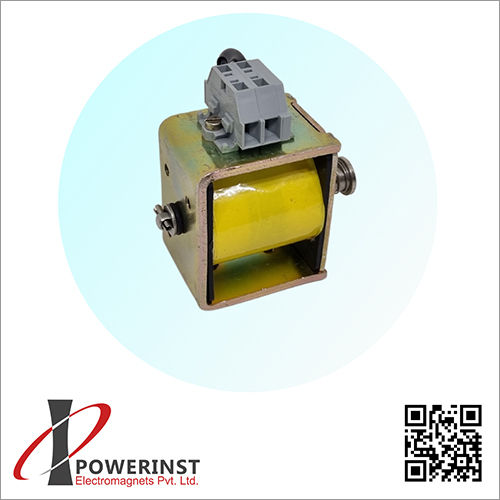
Short Term Solenoids
Price Range 500.00 - 1500.00 INR / Piece
Minimum Order Quantity : 100 Pieces
Usage : Industrial
Power Supply : Electricity
Product Type : Short Term Solenoids
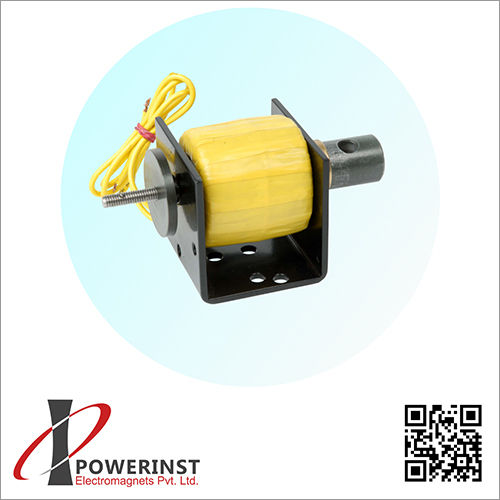
C Type Solenoids
Price Range 500.00 - 1500.00 INR / Piece
Minimum Order Quantity : 100 Pieces
Usage : Industrial
Power Supply : Electricity
Product Type : C Type Solenoids
Pull Type Solenoids
Price Range 500.00 - 1500.00 INR / Piece
Minimum Order Quantity : 100 Pieces
Usage : Industrial
Power Supply : Electricity
Product Type : Pull Type Solenoids

Address
POWERINST ELECTROMAGNETS PRIVATE LIMITED
GST : 27AAHCP6735H1Z4
GST : 27AAHCP6735H1Z4
- 21/1, MIDC, Satpur, M.Corp, Nashik - 422007, Maharashtra, India
- Phone :07313726683
- Send Inquiry
 Send Inquiry
 Send Inquiry
 Send SMS
 Call Me Free
 |
POWERINST ELECTROMAGNETS PVT. LTD.
All Rights Reserved.(Terms of Use) Developed and Managed by Infocom Network Private Limited. |
